
 2nd editionPDF
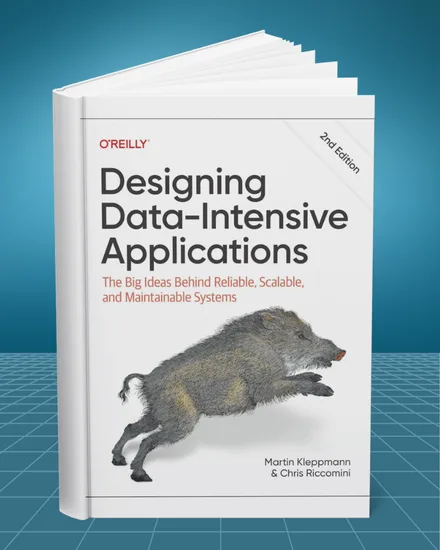
Designing Data Intensive Applications 2nd edition (second edition)
- Format
- Searchable PDF
- Version
- Digital enhanced version
- Delivery
- Instant access
$29.90 USD
Buy PDF ↗Before you buy
This is an eBook/PDF product only. No physical book will be shipped.
Please confirm the book title and edition before completing your purchase.
Your PDF download link will be sent to the email address used at checkout, immediately.
About this book
Designing Data Intensive Applications 2nd edition by Martin Kleppmann and Chris Riccomini examines the engineering decisions behind modern data platforms and distributed applications. Rather than focusing on one database or cloud vendor, the book explains the principles that determine whether systems remain reliable, scalable, maintainable, and understandable as data volume, traffic, infrastructure, and organizational complexity increase.
The 2nd edition covers transactional and analytical systems, relational databases, NoSQL stores, data warehouses, data lakes, cloud and self hosted architectures, replication, partitioning, transactions, consistency, distributed systems failures, batch processing, stream processing, and data integration. It also examines newer technologies and architectural choices involving cloud native systems, Spark, Flink, derived data, fault tolerance, distributed coordination, and the trade-offs engineers face when choosing storage and processing tools.
This book is especially useful for Software Engineers, Backend Engineers, Data Engineers, Distributed Systems Engineers, Database Engineers, Cloud Engineers, Platform Engineers, Solutions Architects, Site Reliability Engineers (SREs), and Computer Science Students studying databases or distributed systems. It is particularly valuable for technical teams designing systems that must handle large datasets, high request volumes, replication across machines or regions, real time processing, and evolving data infrastructure.
Backend engineers, data engineers, architects, SREs, platform teams, database specialists, and advanced computer science students can use this edition to compare architectural options, reason about consistency and fault tolerance, understand database internals, and make better decisions about storage, processing, and distributed system design. The 2nd edition, 2026 is available as a searchable PDF enhanced digital version with instant access, so you can begin using it immediately for system design study, architecture reviews, engineering interviews, database coursework, or production infrastructure planning.